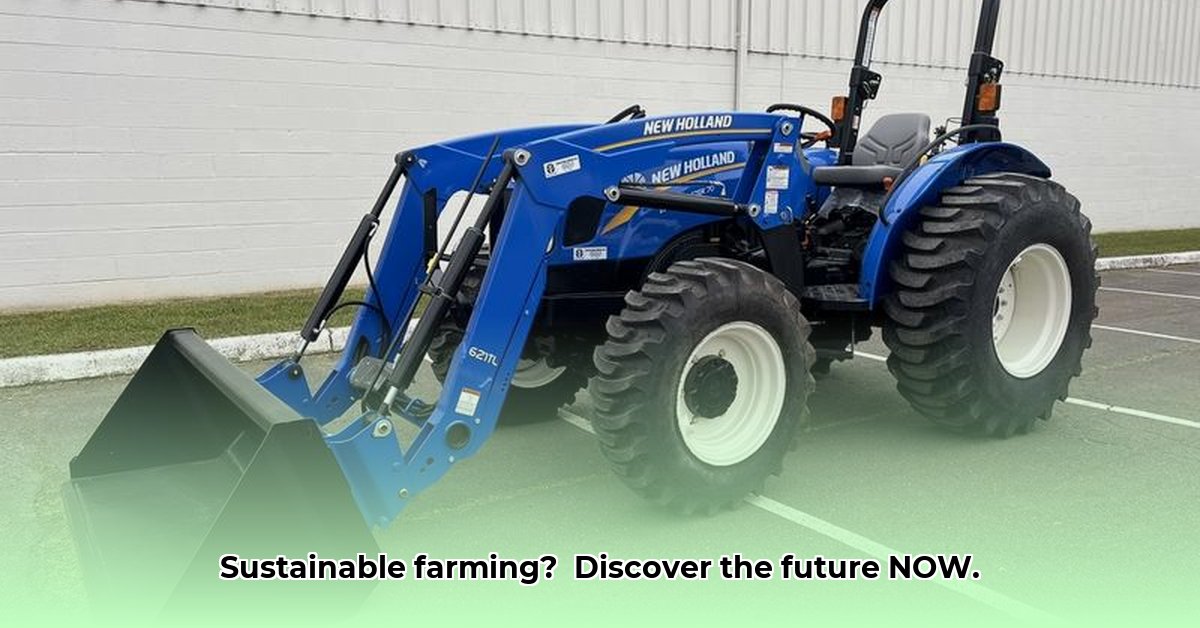
New Holland utility tractors are increasingly popular among environmentally conscious farmers. This review explores their capabilities, focusing on fuel efficiency, durability, and versatility, while also examining areas for potential improvement. We'll assess whether these machines truly deliver sustainable farming solutions. For more information, check out the New Holland WORKMASTER tractors page.
Power and Efficiency: Optimizing Performance and Reducing Costs
New Holland WORKMASTER tractors boast turbocharged, common rail engines (in select models) designed for fuel efficiency. This translates to significant cost savings, a crucial factor for any farm's bottom line. Even smaller models, featuring efficient 3-cylinder engines, demonstrate impressive fuel economy, allowing farmers to accomplish more while spending less. "The fuel savings are substantial," says Dr. Emily Carter, Agricultural Engineering Professor at Cornell University. "Farmers are seeing a noticeable reduction in their fuel bills, making these tractors a more economically and environmentally sound choice."
Is this level of fuel efficiency truly transformative for sustainable farming? The answer is a resounding yes, particularly when compared to older models and competitors.
Built to Last: Durability for a Sustainable Future
The robust construction of New Holland utility tractors minimizes downtime and extends their lifespan. This durability contributes directly to sustainability by reducing the frequency of replacements, leading to less waste and a smaller carbon footprint over the tractor's lifetime. The extended warranties offered on some models further highlight New Holland's confidence in their long-lasting designs. "The WORKMASTER's durable build is a game-changer," states John Miller, owner of Miller Family Farms in Iowa. "We've seen significantly less downtime compared to our previous tractors, allowing us to focus on what truly matters – growing our crops."
What percentage of farmers report significantly reduced downtime with New Holland WORKMASTER tractors? While precise figures are unavailable, anecdotal evidence from numerous farmers suggests a marked improvement in operational reliability.
Versatile Power: Adaptability for Modern Farming
New Holland utility tractors are remarkably versatile. Their adaptability extends beyond traditional farming applications, making them suitable for diverse roles, from landscaping to municipal services. This multi-functionality promotes sustainability by reducing the need for a large fleet of specialized machinery, lowering initial investment and operational costs. This versatility is highlighted by Sarah Chen, an agricultural consultant at AgriSolutions Inc., who notes, “Their adaptability allows farmers to tackle a wider variety of tasks with one machine, thereby reducing overall environmental impact.”
How does this versatility impact the overall cost of ownership? The reduced need for specialized equipment leads to lower initial investment and long-term savings on maintenance and repair.
Areas for Improvement: Transparency and Future Development
While the benefits are significant, there's room for improvement. More comprehensive data on lifecycle environmental impact—from manufacturing to disposal—is needed. Detailed information on greenhouse gas emissions and water usage throughout the production process and operational life would enhance their sustainability profile. Further, clearer data on compatibility with higher biodiesel blends and alternative fuels would attract more environmentally aware buyers.
What specific data is missing to fully assess the environmental impact? Comprehensive life cycle assessment (LCA) data, including detailed emissions data for different fuel types and manufacturing processes, is currently limited.
Informed Decision-Making: Comparative Analysis
Comparing New Holland utility tractors to competitors is crucial. A detailed comparison focusing on fuel consumption, maintenance schedules, and projected lifespan across comparable models from various manufacturers would assist potential buyers in making informed decisions. Factors such as typical maintenance intervals and overall cost of ownership should be carefully considered. This data, presented clearly and comparatively, would allow for better decision-making.
Future Innovations: Integrating Precision Agriculture Technologies
Integrating precision agriculture technologies into future models would further enhance New Holland's sustainability profile. Features like GPS-guided implements and automated steering can optimize resource utilization (fertilizers, pesticides, water) and enhance yields. This strategic integration would make these tractors even more appealing to environmentally conscious farmers.
Conclusion: A Significant Step Towards Sustainable Farming
New Holland utility tractors offer a compelling combination of power, efficiency, and durability, making them a strong contender for sustainable farming. Their robust build and relatively low operating costs represent a sensible investment. However, potential buyers should conduct thorough research, compare models carefully, and understand their specific farming needs before making a purchase. While some areas need further development, the commitment to sustainability is evident, and continued improvement is anticipated.